
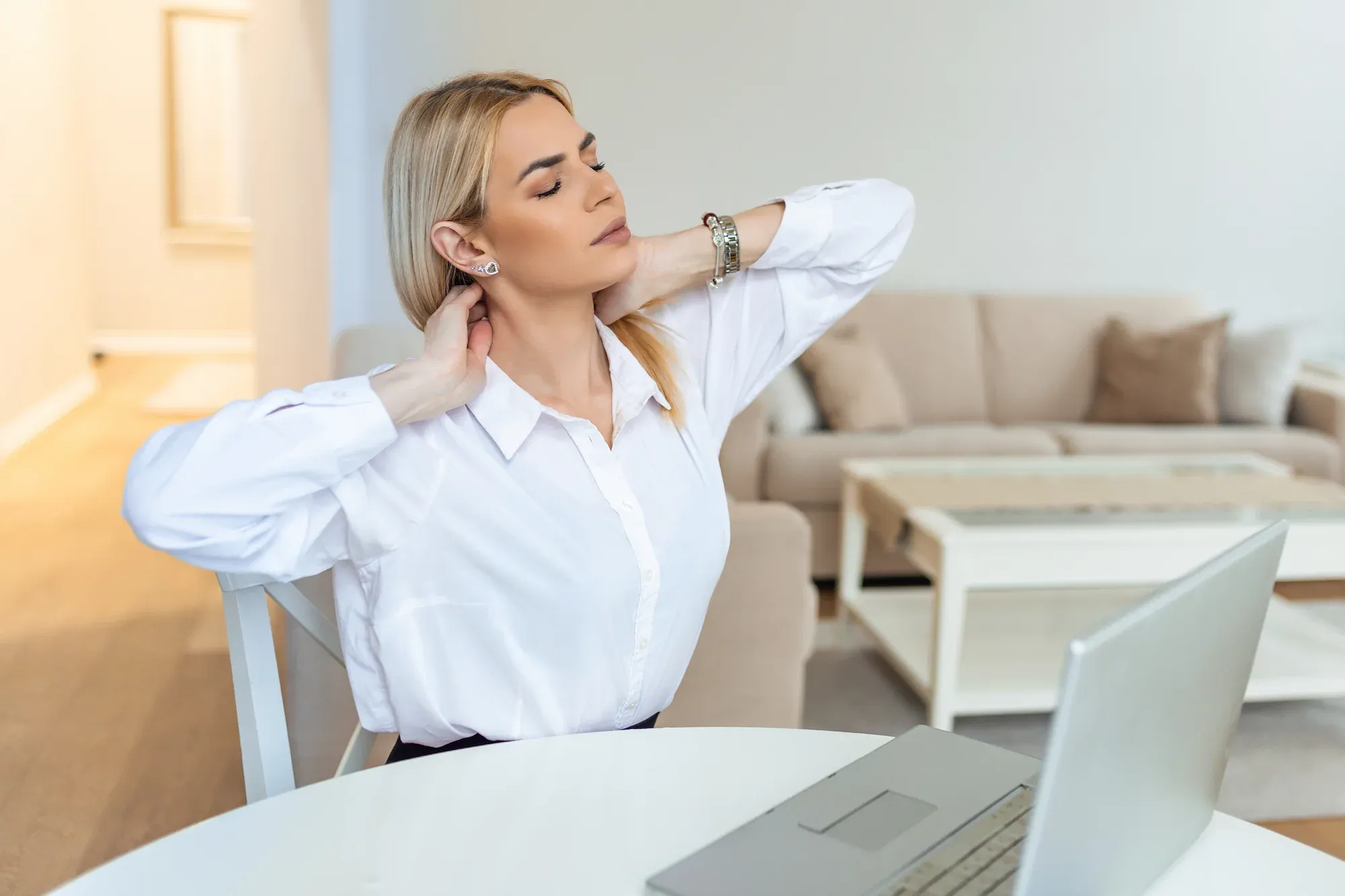


Patient consulting about neck pain relief at Bensa Chiropractic and Wellness Bradenton

Neck Pain Treatment in Bradenton, FL

Reclaim Your Comfort and Mobility

Common In:Adults 25+
Primary Causes:Posture, Injury, Degeneration
Treatment Time:15-45 minutes
Results:Immediate to 6 weeks
Close-up illustration of cervical spine anatomy at Bensa Chiropractic and Wellness Bradenton

What Is Neck Pain?

Recognizing the Signs

Neck pain, clinically known as cervicalgia, is a musculoskeletal condition affecting the cervical spine and its surrounding soft tissues. The cervical spine consists of seven vertebrae that support the head's full range of motion while protecting the spinal cord. When these structures become irritated, compressed, or misaligned, the result is pain that can range from a dull, persistent ache to sharp, debilitating discomfort.

When you wake up unable to turn your head, or when hours at your desk leave your neck stiff and throbbing, you are experiencing the direct impact of cervical dysfunction. Many people first notice the condition as a gradual tightness that worsens throughout the day, often radiating into the shoulders or upper back.

Neck pain affects far more than physical comfort. Many patients describe difficulty concentrating at work, interrupted sleep, and the frustration of being unable to enjoy activities they once took for granted. The constant awareness of discomfort can affect mood, productivity, and overall quality of life.

Illustration of cervical spine mechanics and postural stress at Bensa Chiropractic and Wellness Bradenton

Why Neck Pain Happens

Understanding the Root Causes

The cervical spine is designed to support approximately 10 to 12 pounds of head weight while allowing more than 180 degrees of combined rotational and flexion movement. This remarkable mobility comes at a cost: the cervical region is inherently vulnerable to mechanical stress. Even a 15-degree forward head tilt can effectively double the load on cervical structures, a phenomenon increasingly common in our screen-dependent culture.

When spinal segments lose their proper alignment, the surrounding muscles compensate by tightening unevenly. This muscular imbalance creates a cascade of dysfunction: restricted blood flow, compressed nerve roots, and chronic inflammation that perpetuates the pain cycle. Over time, these compensatory patterns can lead to joint fixations that limit normal cervical motion.

The intervertebral discs between cervical vertebrae also play a critical role. These cushioning structures lose hydration and height with age and repetitive stress, reducing their ability to absorb shock. As disc height decreases, the facet joints bear more load than intended, leading to irritation and the development of osteoarthritic changes that further restrict movement.


Diagram showing cervical nerve pathways at Bensa Chiropractic and Wellness Bradenton

Cervical Disc & Nerve Function

How Spinal Health Affects Your Neck

The cervical spinal nerves exit between each vertebra and branch out to serve the head, neck, shoulders, arms, and hands. When a cervical disc bulges or herniates, or when bone spurs narrow the neural foramen, these nerves can become compressed. This compression, known as cervical radiculopathy, produces symptoms that extend far beyond the neck itself, including radiating arm pain, tingling, and weakness.

Proprioceptive dysfunction is another underappreciated consequence of chronic neck pain. The cervical spine contains a dense concentration of mechanoreceptors that relay positional information to the brain. When joint restrictions or muscle tension disrupts these signals, patients may experience dizziness, impaired balance, and difficulty with spatial orientation, symptoms that often resolve once cervical function is restored.

The relationship between cervical health and headaches is well established. The upper cervical segments, particularly C1-C3, share neural pathways with the trigeminal nerve system that serves the face and head. Dysfunction in these segments frequently manifests as cervicogenic headaches, tension-type headaches that originate from the neck rather than the cranium itself.

Lifestyle factors contributing to neck pain at Bensa Chiropractic and Wellness Bradenton

What Accelerates Neck Pain?

Identifying Your Triggers

01

Poor Posture

Forward head posture from prolonged screen use places up to 60 pounds of force on the cervical spine, straining muscles, ligaments, and disc structures over time.

02

Workplace Ergonomics

Improperly positioned monitors, unsupportive chairs, and repetitive motions create sustained mechanical stress on the cervical region throughout the workday.

03

Age-Related Degeneration

Cervical disc hydration decreases approximately 1% per year after age 30, reducing shock absorption and increasing vulnerability to joint irritation and stiffness.

04

Trauma & Injury

Whiplash from auto accidents, sports collisions, or falls can damage cervical ligaments and joints, often causing delayed symptoms that appear days or weeks later.

05

Stress & Tension

Chronic psychological stress triggers sustained contraction of the trapezius and cervical paraspinal muscles, creating painful trigger points and restricted mobility.

06

Sleep Position

Sleeping on your stomach or with inadequate pillow support forces the neck into prolonged unnatural positions, leading to morning stiffness and recurring discomfort.

Bensa Chiropractic and Wellness clinic interior in Bradenton Florida

Why Choose Bensa Chiropractic and Wellness

Expert Care in Bradenton

  • Thorough Assessment
  • Personalized Treatment Plans
  • Multiple Technique Options
  • Whole-Body Approach

Treatment Options Comparison

Finding Your Best Approach

Treatment Best For Session Time Results Timeline Maintenance
Chiropractic Adjustments Joint restriction & alignment 15-20 min 1-4 weeks Monthly or as needed
Activator Technique Gentle, precise correction 10-15 min 2-6 weeks Bi-weekly to monthly
Intersegmental Traction Disc hydration & mobility 10-15 min 2-4 weeks 2-3 times weekly
Physical Therapy Strengthening & rehabilitation 30-45 min 4-8 weeks Ongoing home program
Person concerned about persistent neck discomfort at Bensa Chiropractic and Wellness Bradenton

You May Be Experiencing Neck Pain If...

Recognizing When to Seek Help

  • Morning Stiffness
  • Limited Head Turning
  • Radiating Pain
  • Headache Connection
  • End-of-Day Tension
  • Disrupted Sleep

Frequently Asked Questions

About Neck Pain

01 Can I prevent neck pain from getting worse?

Yes, many patients can slow or prevent progression by improving workplace ergonomics, maintaining good posture, staying physically active, and seeking early chiropractic evaluation when symptoms first appear. Regular adjustments help maintain proper cervical alignment before minor issues become chronic conditions.

02 How do I know which treatment is right for my neck pain?

During your initial consultation, we perform orthopedic and neurological testing to identify the specific cause of your pain. Based on those findings, we may recommend chiropractic adjustments, Activator Technique for gentler correction, intersegmental traction, or a combination approach tailored to your condition.

03 How quickly will I see improvement in my neck pain?

Many patients experience some relief after their first chiropractic adjustment, though lasting improvement typically develops over two to six weeks of consistent care. The timeline depends on factors like how long you have had the condition, its underlying cause, and your adherence to the recommended treatment plan.

04 Is neck pain a normal part of aging?

While age-related changes in the cervical spine are common, persistent neck pain is not something you should accept as inevitable. Degenerative changes can be managed effectively with chiropractic care and rehabilitative exercise, helping you maintain comfort and mobility regardless of age.

05 Can screen time and desk work affect my neck?

Absolutely. Prolonged screen use encourages forward head posture, which dramatically increases the mechanical load on your cervical spine. We recommend ergonomic adjustments to your workstation and regular movement breaks, along with periodic chiropractic care to counteract the cumulative effects of desk-based work.

06 What can I do at home between chiropractic visits?

We typically recommend gentle cervical stretches, postural awareness exercises, proper sleeping position guidance, and ergonomic modifications. Many patients also benefit from applying ice or heat as directed. These home care strategies complement your in-office treatments and help maintain progress between visits.

07 Can multiple treatments be combined for better results?

Yes, in many cases a multimodal approach yields the best outcomes. For example, chiropractic adjustments to restore alignment combined with intersegmental traction for disc mobility and physical therapy for muscular strengthening often produces more comprehensive and lasting relief than any single treatment alone.

08 When should I see a chiropractor about my neck pain?

We recommend seeking professional evaluation if your neck pain persists beyond a few days, limits your daily activities, radiates into your arms or hands, or is accompanied by headaches, numbness, or tingling. Early intervention typically leads to faster recovery and helps prevent chronic patterns from developing.

Location4618 E State Road 64
Bradenton, FL, 34208

Schedule Your Consultation


Scientific References

  1. 1. PubMed (PMID: 24262386) - Evidence-based guidelines support the use of spinal manipulation and mobilization for the chiropractic treatment of adults with neck pain, recommending multimodal approaches for both acute and chronic cervicalgia.
  2. 2. PubMed (PMID: 27836071) - Clinical practice guidelines for neck pain-associated disorders recommend manipulation, mobilization, and multimodal care as effective interventions for managing cervical pain conditions.
  3. 3. PubMed (PMID: 35295422) - A systematic review found clinical effectiveness and efficacy of chiropractic spinal manipulation for spine pain, with spinal manipulative therapy as effective as other recommended therapies for non-specific cervical pain.
  4. 4. PubMed (PMID: 31870638) - Best-practice recommendations for chiropractic management of patients with neck pain support multimodal care combining manipulation with exercise and patient education for improved outcomes.
  5. 5. PubMed (PMID: 27792118) - A meta-analysis of randomized controlled trials found that intermittent cervical traction, when combined with other interventions, may provide benefit for patients with neck pain and cervical radiculopathy symptoms.